


Preschool worksheets (ages 3 to 5)
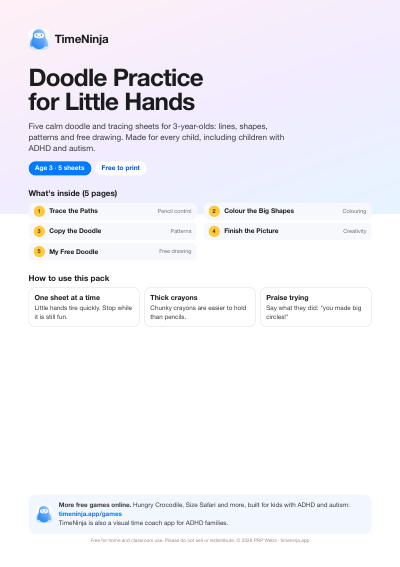
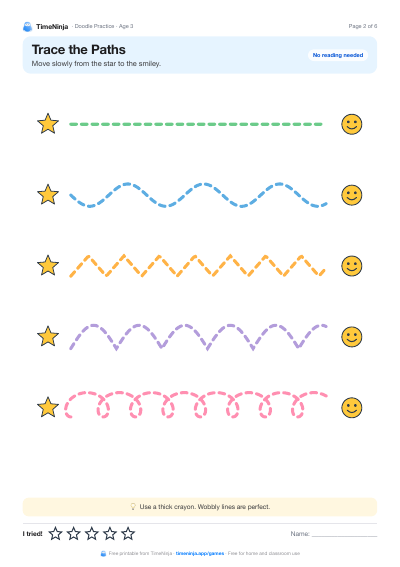
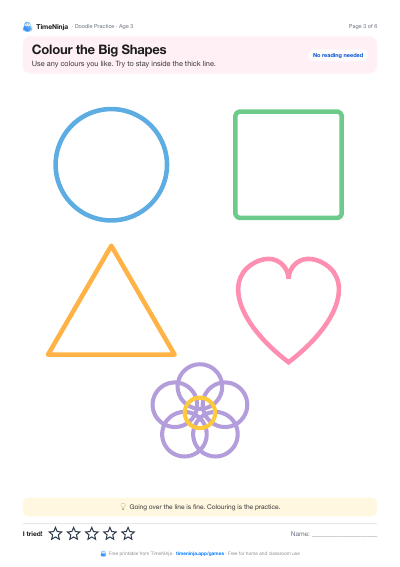
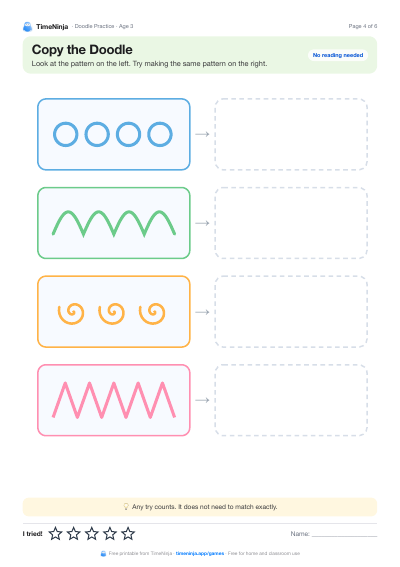
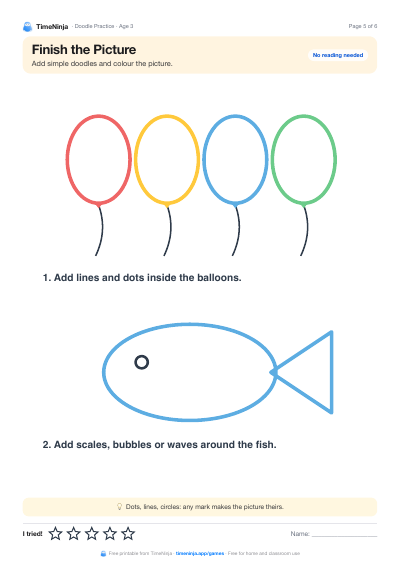
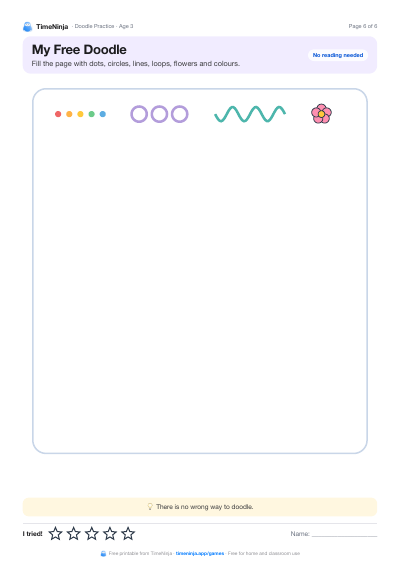
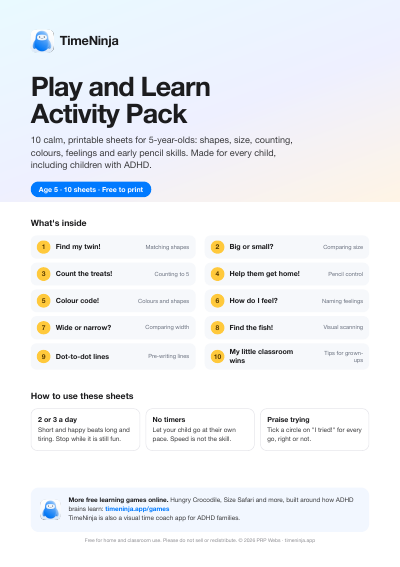
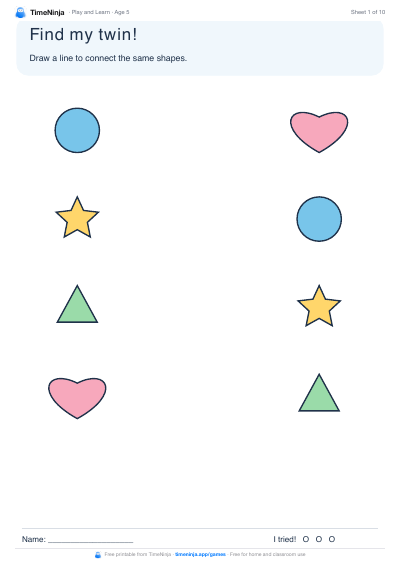
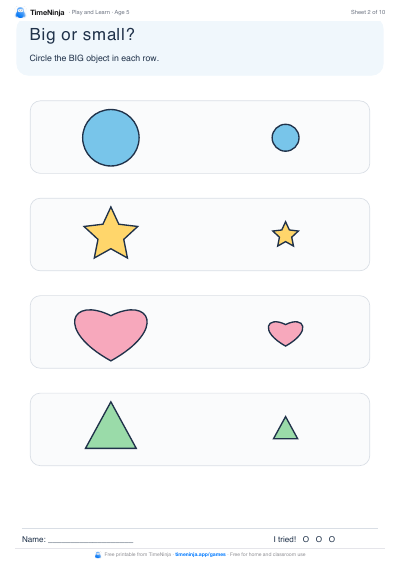
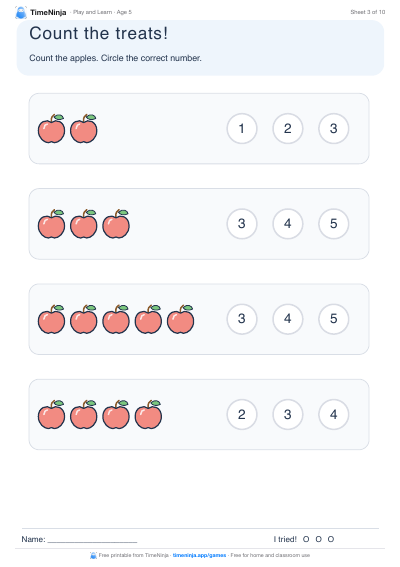
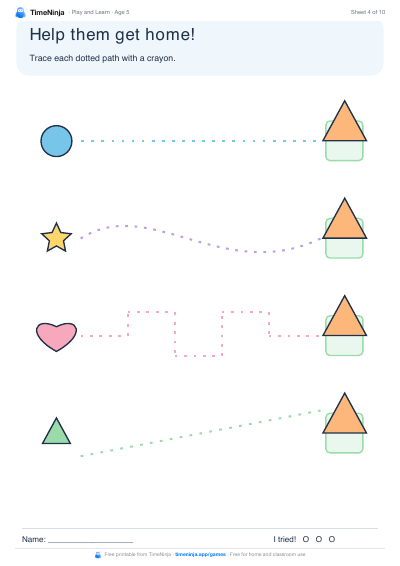
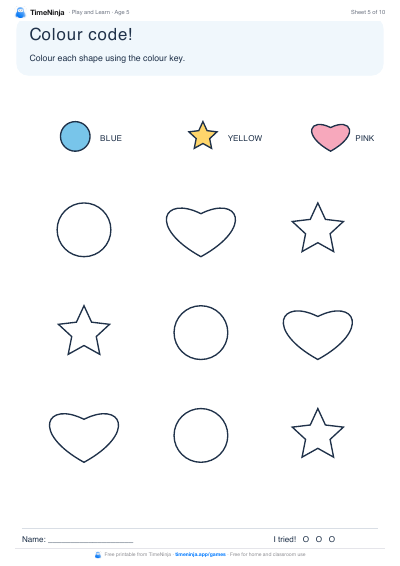
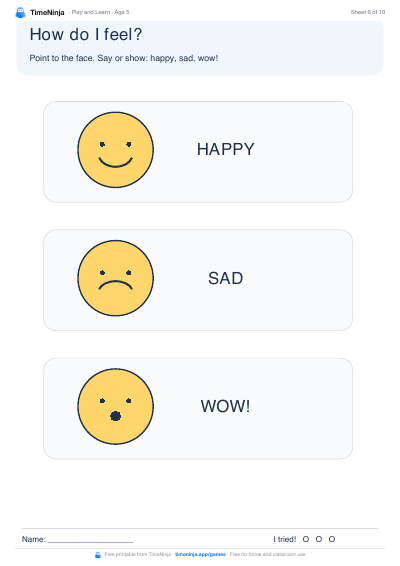
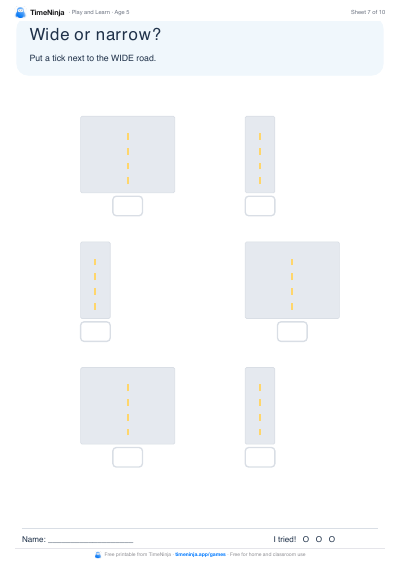
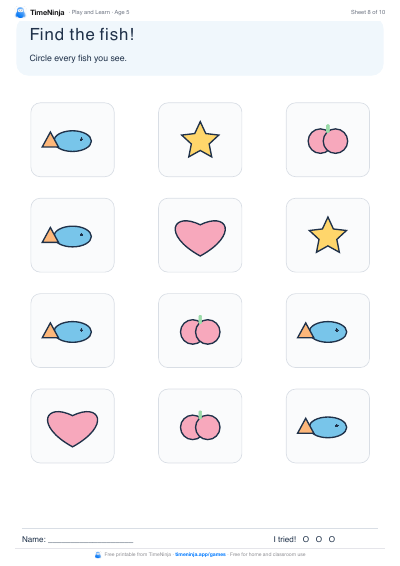
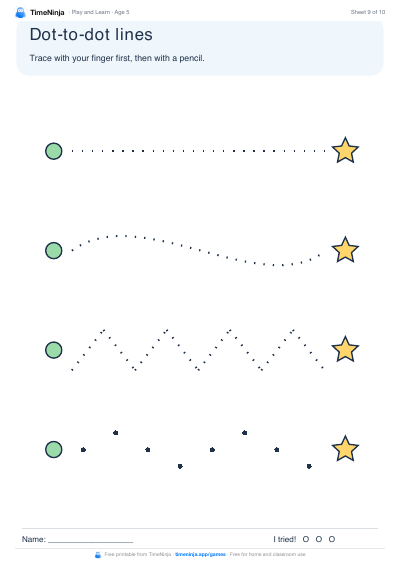
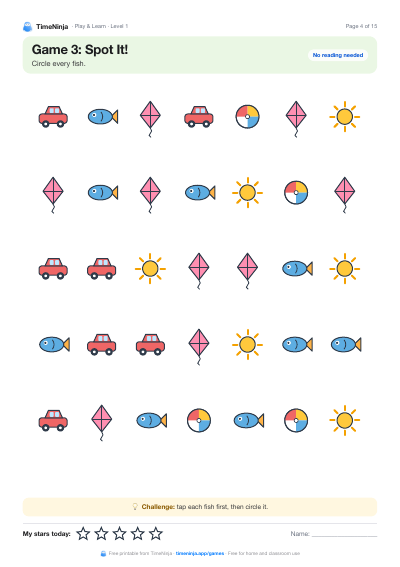
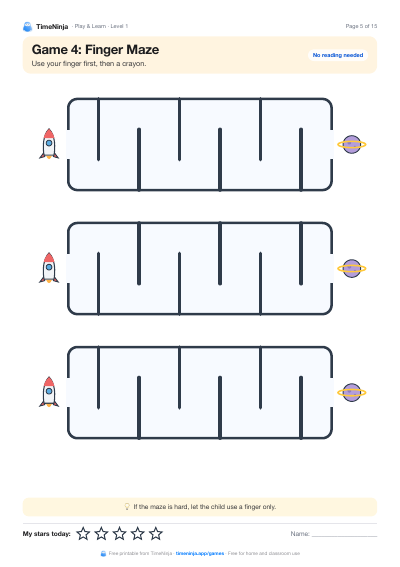
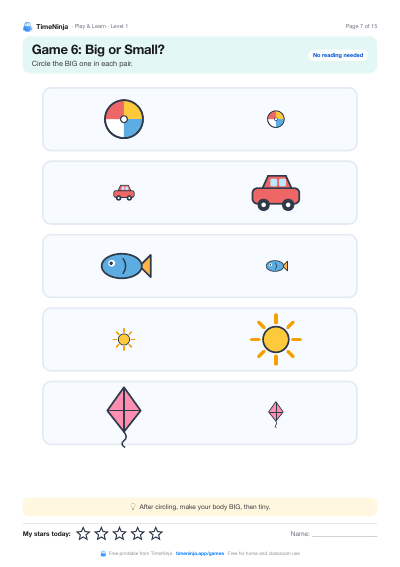
For preschoolers the goal is pencil control, noticing what is the same and different, and counting small groups. Start with Doodle Practice: big lines, curves and shapes to trace, one at a time, with plenty of space. Then move to the Play and Learn Activity Pack for matching, big and small, simple mazes, counting and feelings. One or two pages a day is plenty at this age.
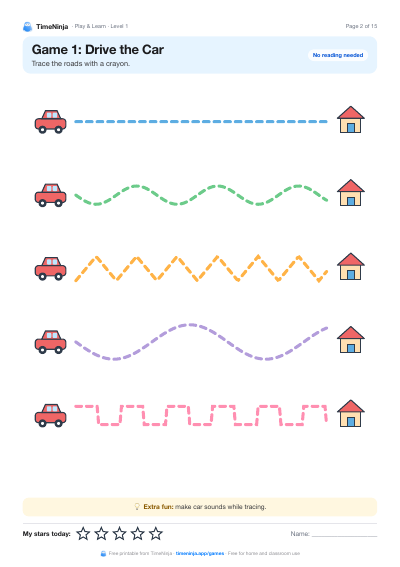
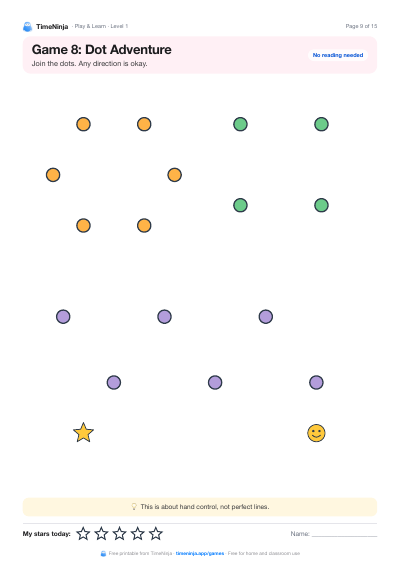
- Tracing and pre-writing: straight lines, zigzags, curves and circles before letters.
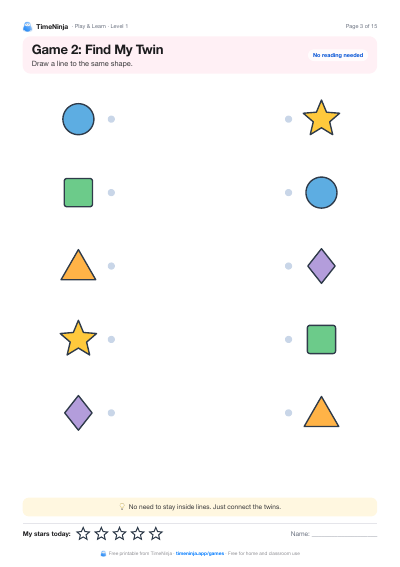
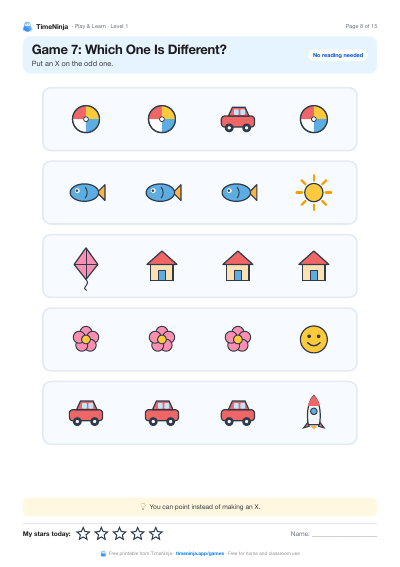
- Matching and sorting: same and different, big and small, colors and shapes.
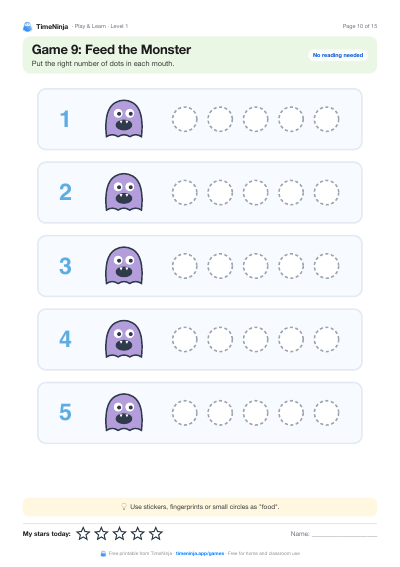
- Counting: small groups of objects, by pointing and coloring.
Kindergarten worksheets (ages 5 to 7)
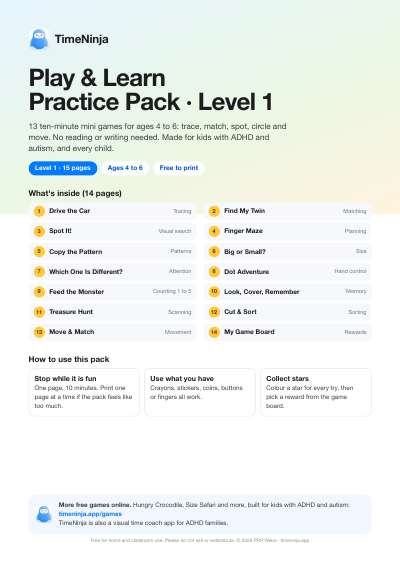
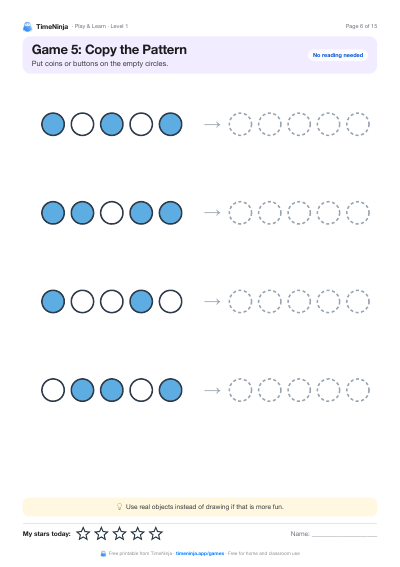
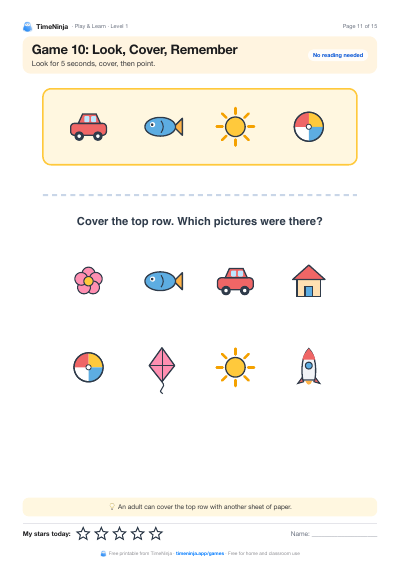
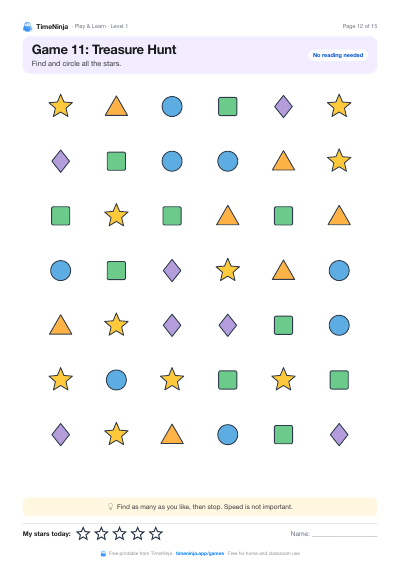
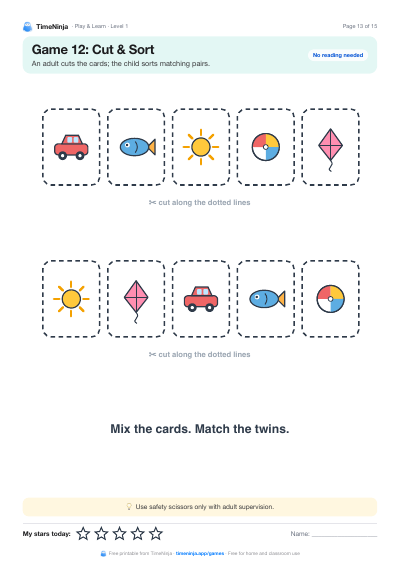
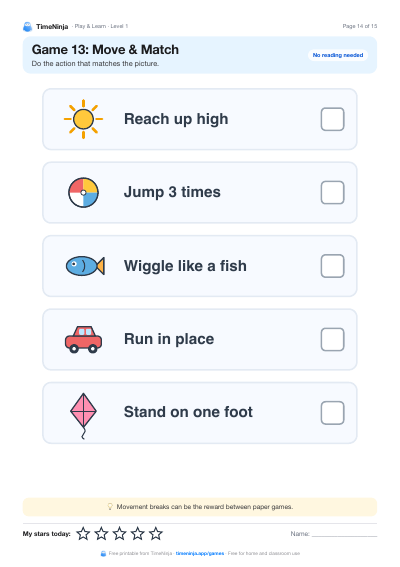
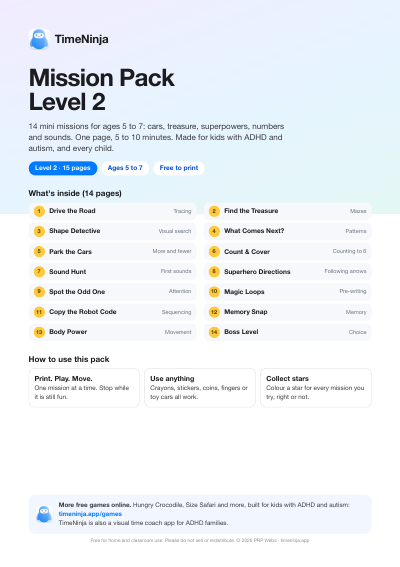
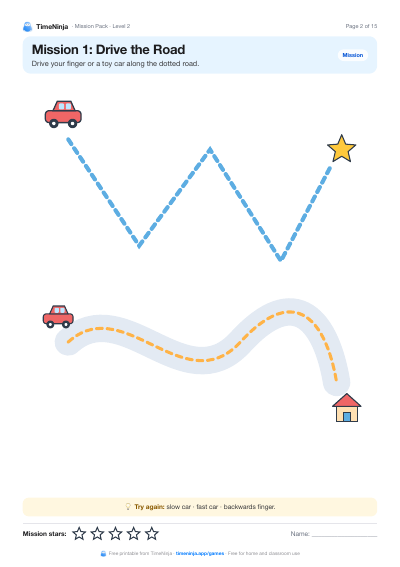
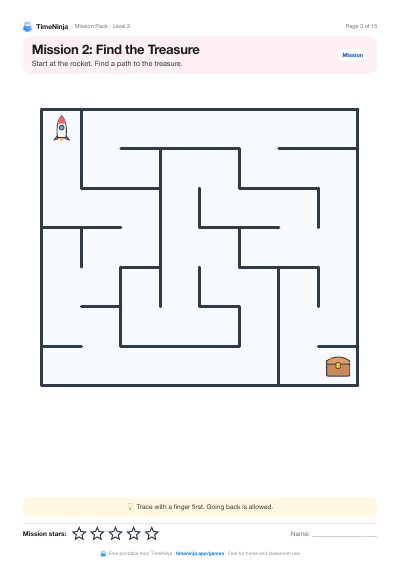
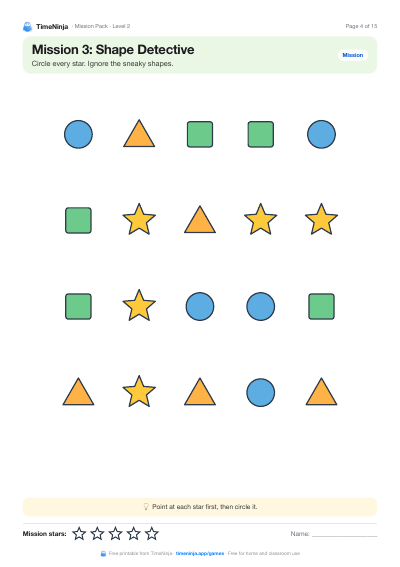
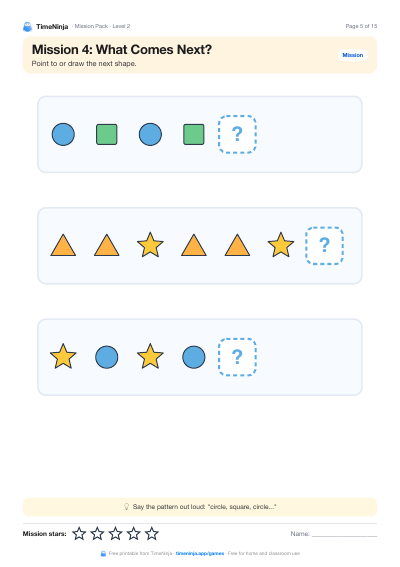
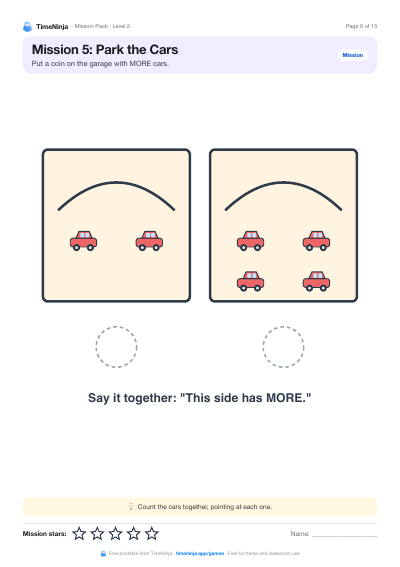
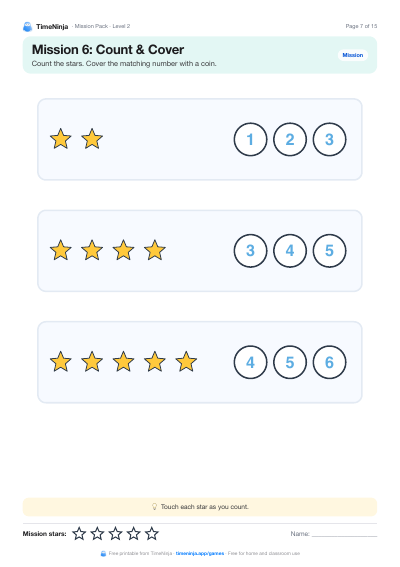
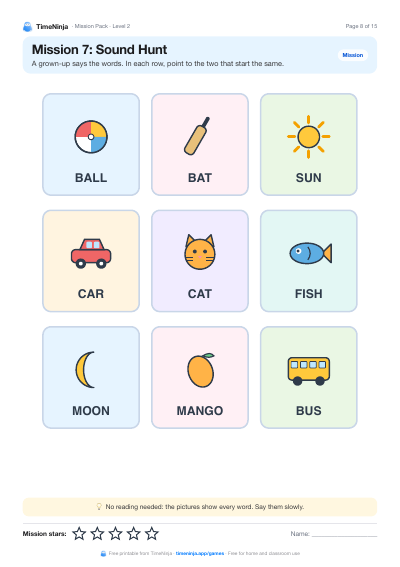
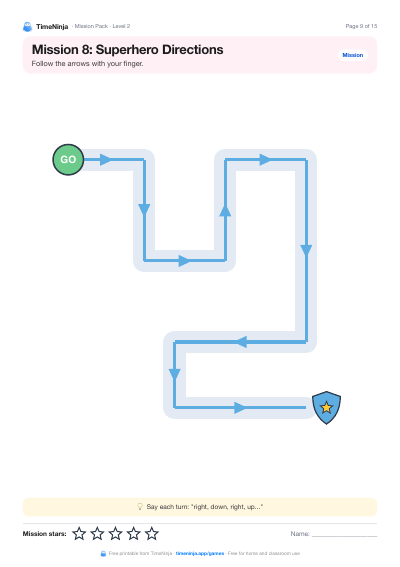
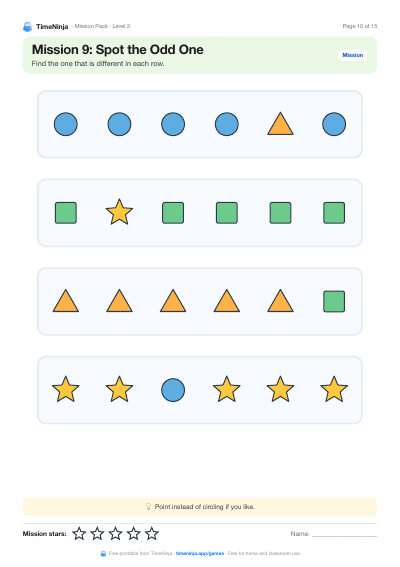
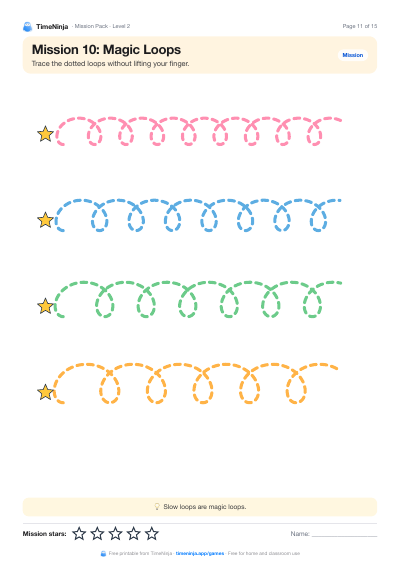
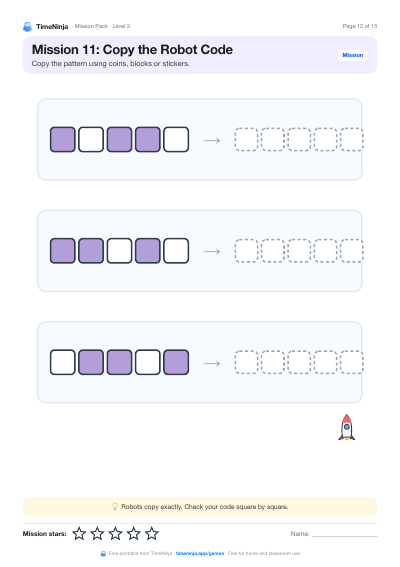
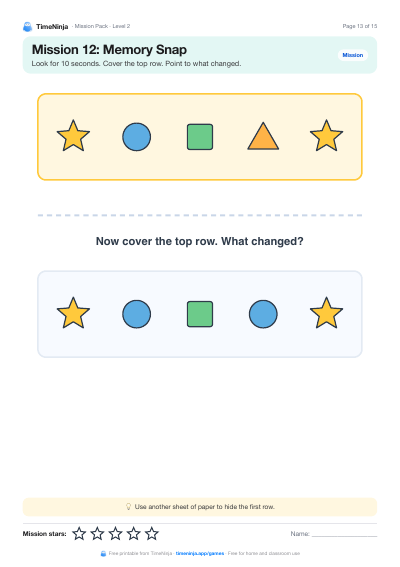
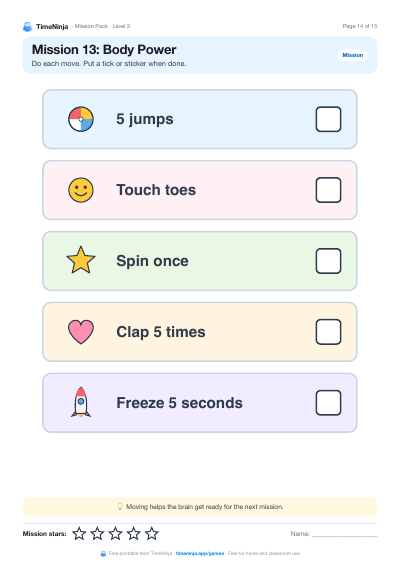
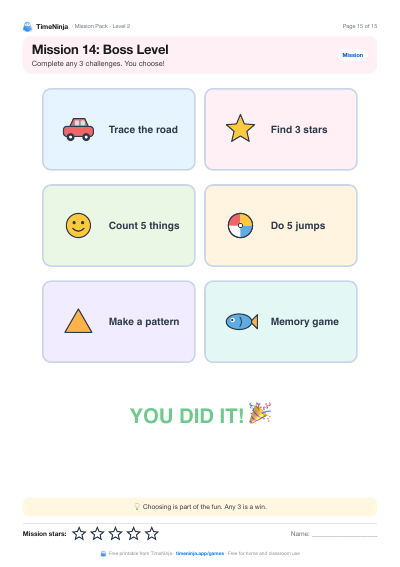
For kindergarten, the Play and Learn Practice Pack, Level 1 and the Mission Pack, Level 2 add patterns (what comes next?), mazes with more turns, sound hunts, directions, memory games and movement breaks. Each page is still one task, so a child who finds worksheets hard can finish it and color a star.
- Numbers and patterns: count and cover, big and small, what comes next.
- Thinking skills: mazes, spot the difference and memory pages.
- Movement pages: short body breaks built into the pack, which help children who need to move.
For more practice on a screen, the same skills are in our free learning games, such as greater than and less than and the number line.
How to use the sheets
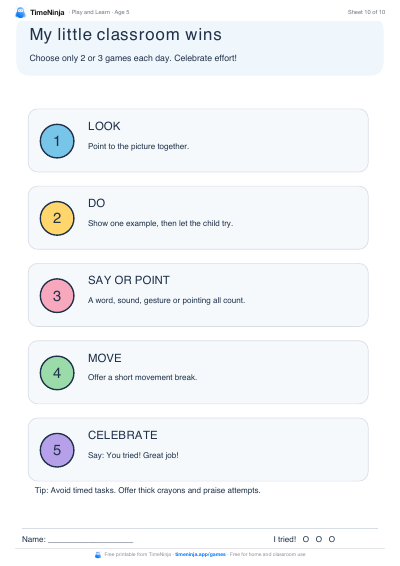
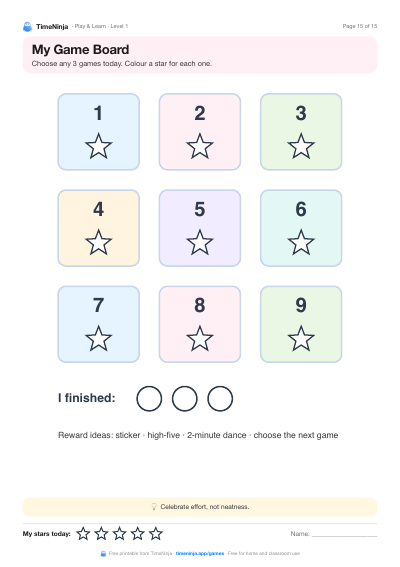
Pick one to three pages a day, not a whole pack. Sit beside your child, point to the picture together, show one example, then let them try. A word, a sound, a gesture or pointing all count as an answer. After each page, color a star and say what they did: effort is what gets celebrated.
Why they work for children with ADHD and autism
- One task per page. One instruction, big pictures and plenty of white space, so there is nothing to sort out before starting.
- The same layout every time. Title at the top, task in the middle, stars at the bottom. Predictable pages are easier to begin.
- No timers and no marks. Stars reward having a go, not getting it right.
- Short by design, with movement built in. Each page takes a few minutes, and the Level packs include movement pages as breaks.
- No reading needed. Pictures carry every task, and a grown-up reads the one-line instruction aloud.
More in our guide: learning games and printables for kids with ADHD and autism.
Pair them with the online games
The same skills are in our free games: Size Safari for big, small, wide and narrow, Candy Monster and Balloon Pop for counting and more or fewer, and Little Train Race for comparing groups. Paper in the morning, a game in the afternoon is a nice rhythm.
Make your own routine charts
Two free builders use the same calm, picture-first style: a printable chore chart with picture chores and a box to tick each day, and a printable visual schedule for morning, after-school and bedtime routines. Pick the pictures, add your child’s name and print.
For parents: plan small goals with your autistic child using our free autism goal sheets: family goals, a small steps ladder, a weekly check-in, an All about me page for teachers, and IEP meeting prep.
Common questions
Do you have free kindergarten worksheets?
Yes. The Play and Learn Practice Pack (Level 1) and the Mission Pack (Level 2) suit kindergarten, ages 5 to 7: patterns, mazes, counting, sounds, memory and movement pages. For preschool, ages 3 to 5, start with Doodle Practice and the Play and Learn Activity Pack. All are free printable PDFs.
Are these activity sheets really free?
Yes. Download any pack and print as many copies as you need for home or your classroom. There is no sign-up and no email. Please don't sell or re-share the files themselves; share a link to this page instead.
Which pack should I start with?
Doodle Practice suits 3-year-olds and anyone working on pencil control. The Play and Learn pack and Level 1 suit ages 4 to 6. The Level 2 Mission Pack suits ages 5 to 7 and children who enjoyed Level 1. Pick by what your child enjoys, not only by age.
Are they suitable for children with ADHD?
Yes. Each page has one task, big pictures, lots of white space, no timers and no marks. Stars reward trying, not right answers, and each pack suggests only one to three pages a day with movement breaks in between.
Are the sheets suitable for autistic children?
Yes. Every page uses the same predictable layout with one instruction, clear pictures and calm colors. Most tasks can be answered by pointing, a sound or a gesture as well as words, which suits children with speech or language delays. Follow your child's lead.
Will they print on US Letter paper?
The sheets are A4. On US Letter paper choose 'Fit to page' (or 'Scale to fit') in the print dialog. They also print well in black and white.