Free autism goal sheets for parents
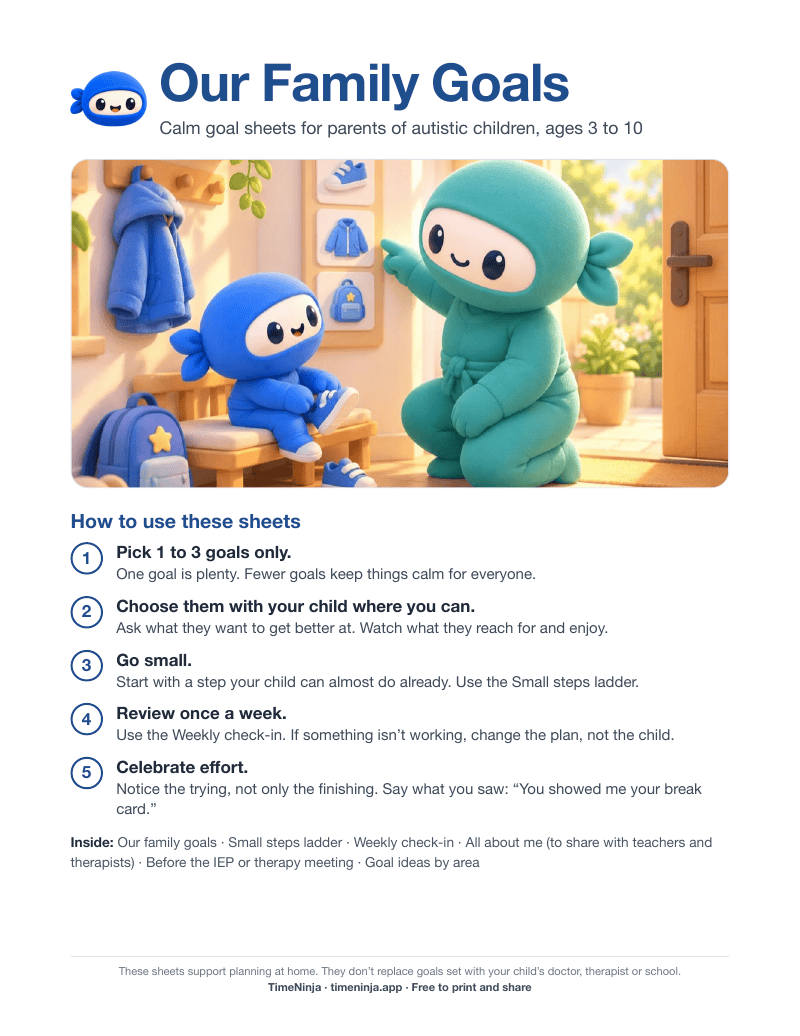
Short answer“Our Family Goals” is a free 7-page printable pack that helps you pick 1 to 3 small goals with your autistic child. You break each goal into steps, check in once a week, write an “All about me” page for teachers and therapists, and get ready for IEP or therapy meetings. Every goal idea builds skills, comfort or independence. None of them ask your child to hide who they are.
What’s inside
हिंदी में डाउनलोड करें (A4)
यही 7 पेज आसान हिंदी में, A4 पेपर के साइज़ में। मुफ़्त है, कोई साइन-अप नहीं।
⬇ हिंदी PDF डाउनलोड करें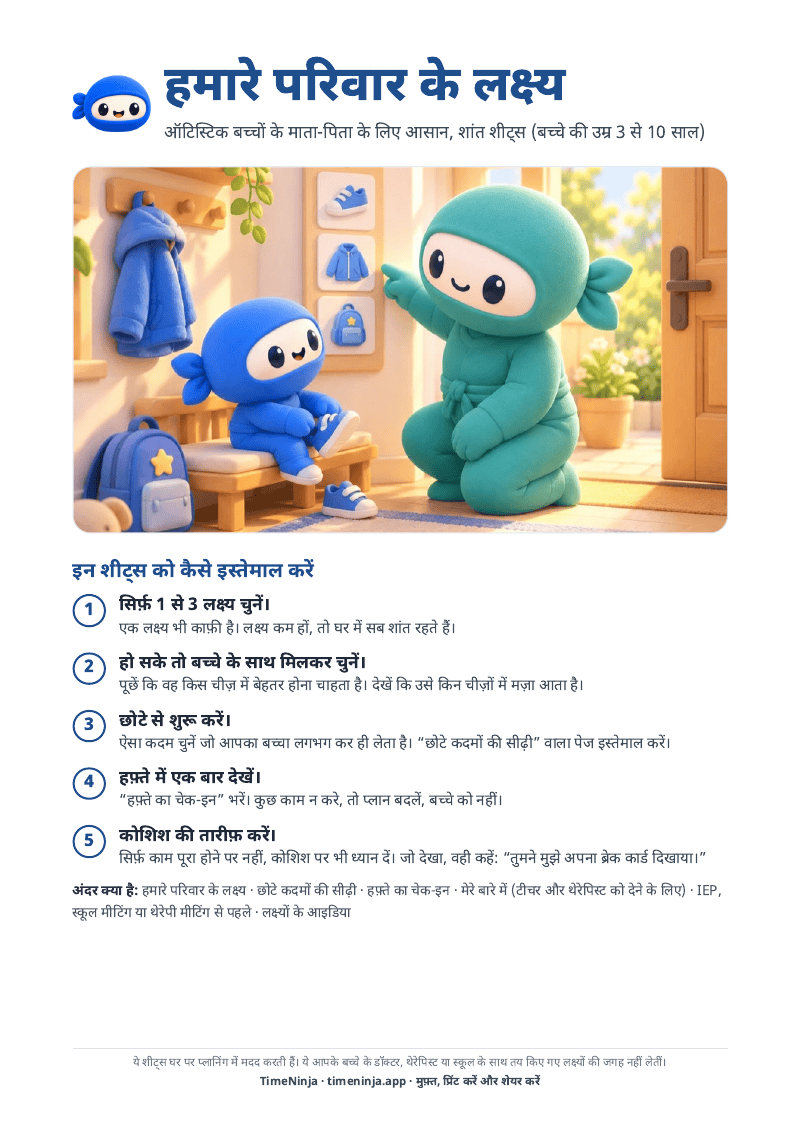
Print tips: the pages are US Letter with wide margins. On A4 paper choose “Actual size” or “Fit to page” and nothing gets cut off. Print the Weekly check-in a few times, or slip it in a plastic sleeve and use a dry-erase pen.
How to use the sheets
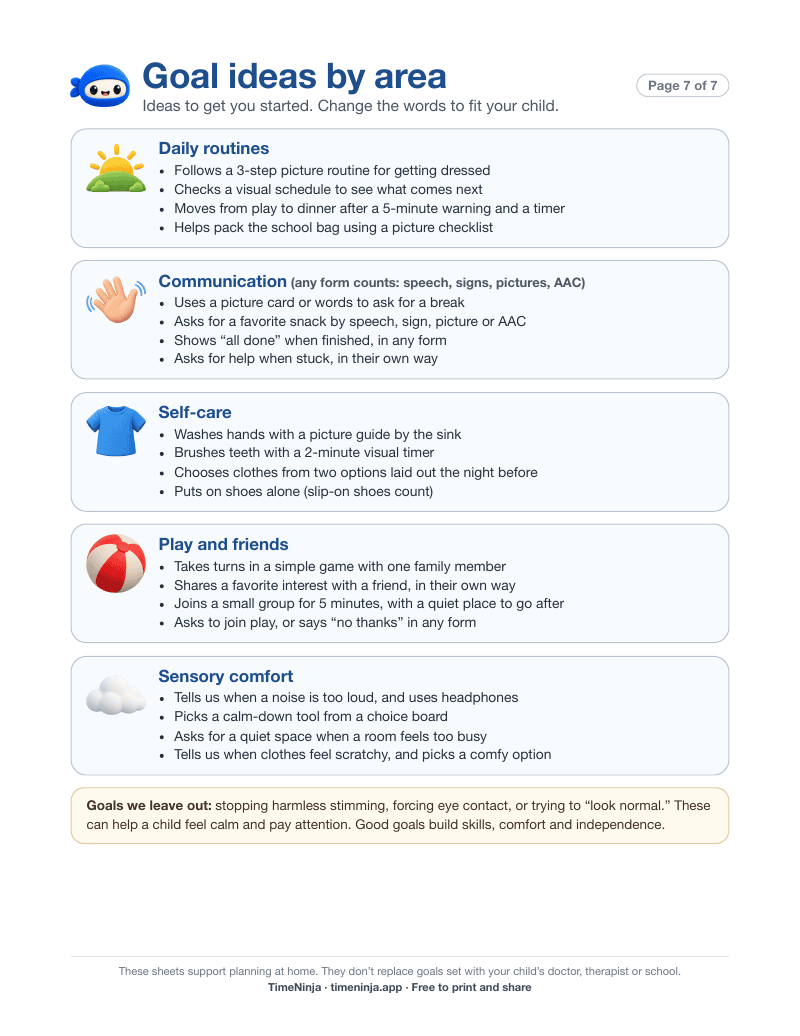
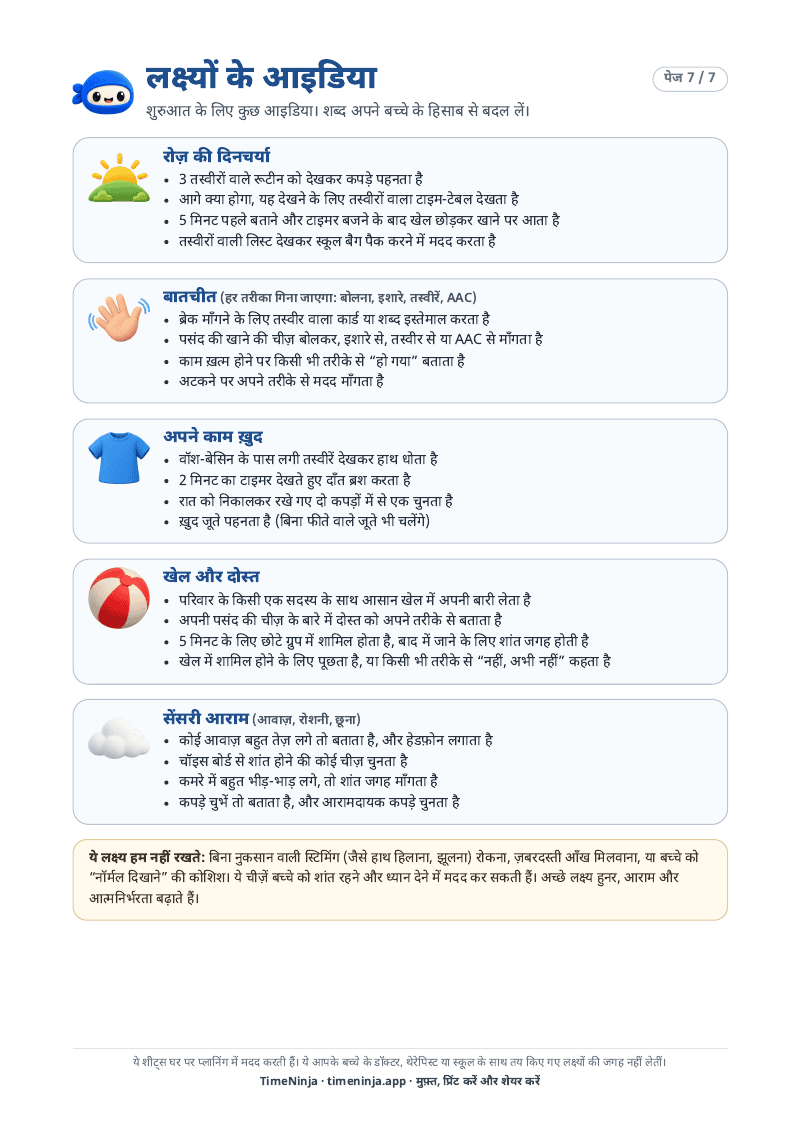
- Start with page 7, Goal ideas by area. Read it once to get ideas for daily routines, communication, self-care, play and sensory comfort.
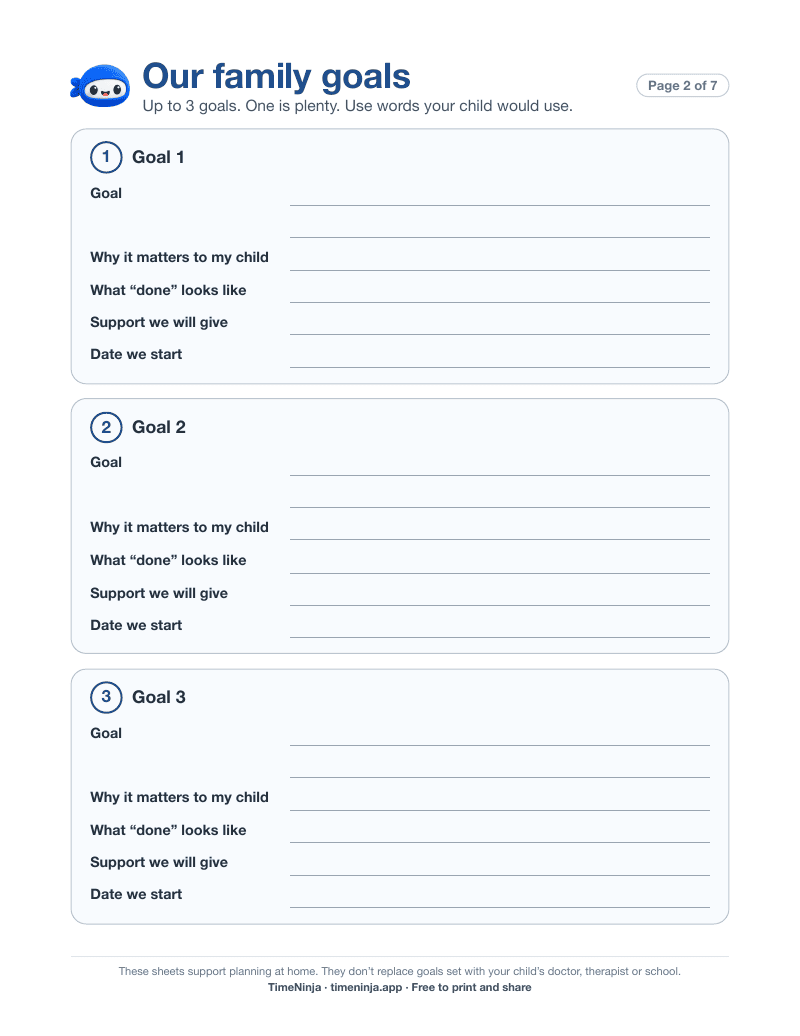
- Pick 1 to 3 goals on Our family goals. One is plenty. For each goal, write why it matters to your child, what “done” looks like and the support you will give.
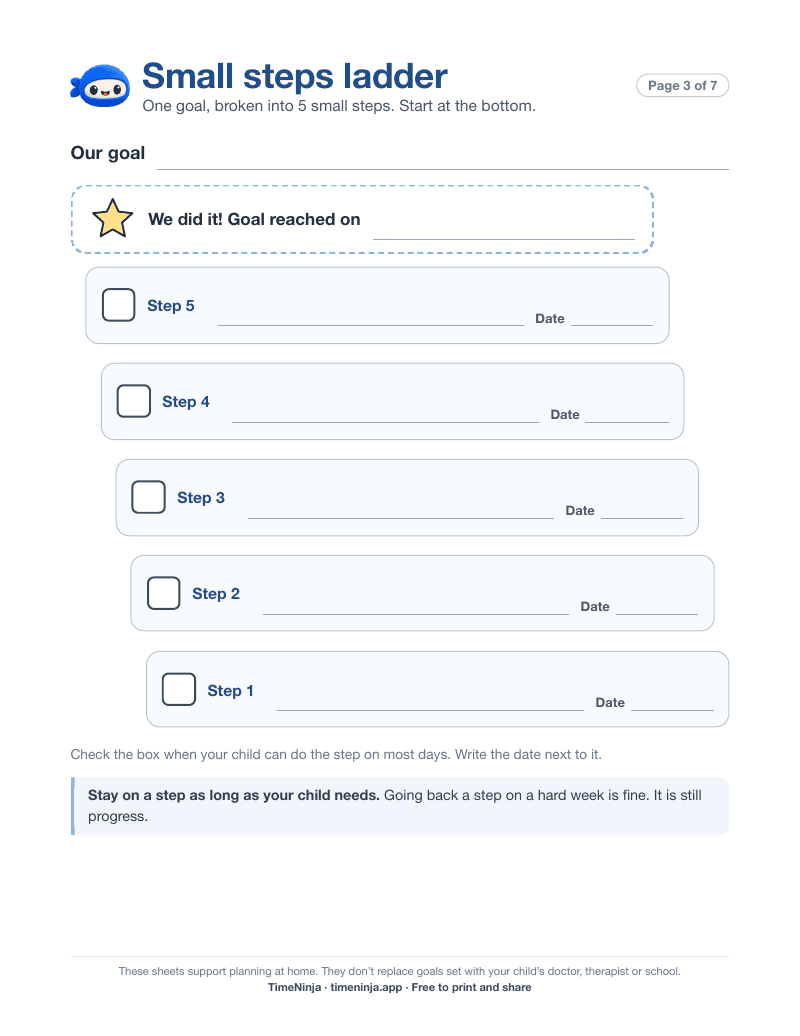
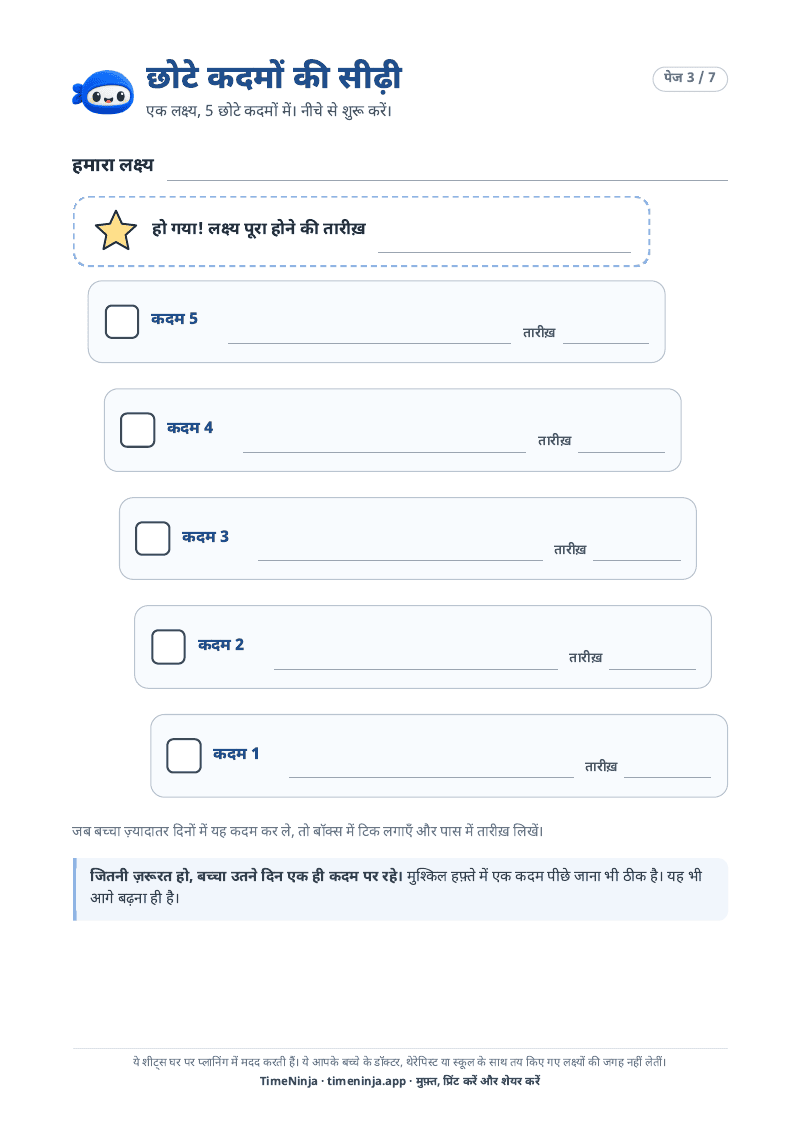
- Break one goal into 5 steps on the Small steps ladder. Step 1 should be something your child can almost do already. Check a box and write the date when a step feels easy on most days.
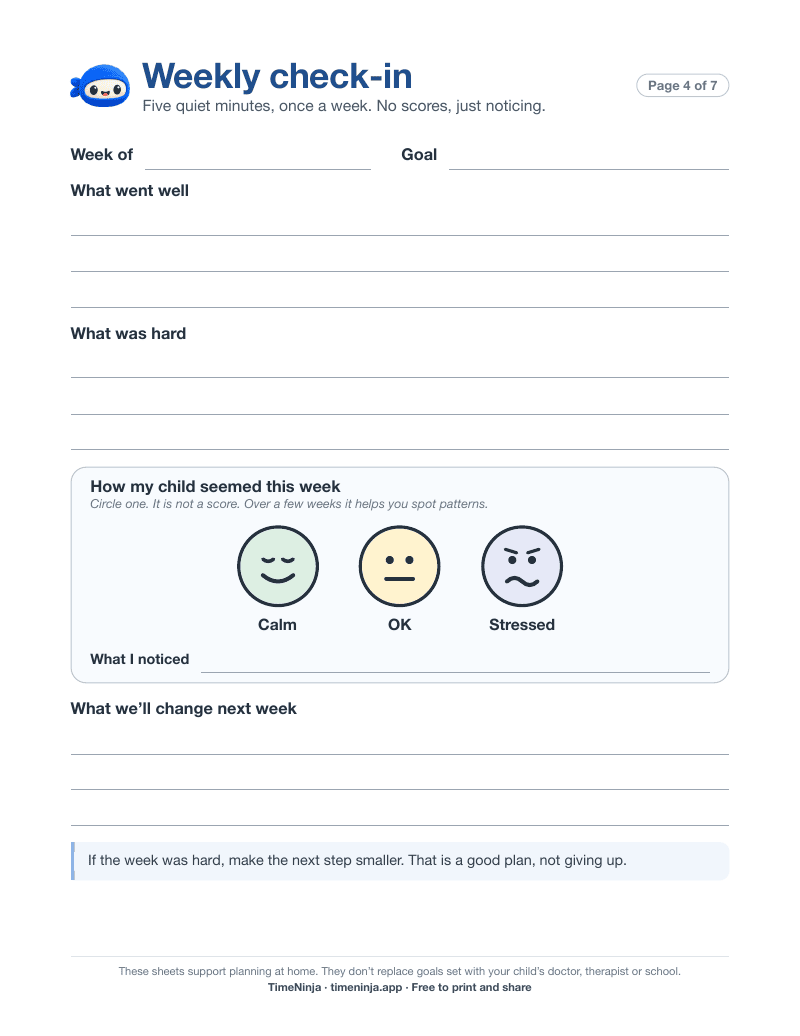
- Do the Weekly check-in. Five quiet minutes: what went well, what was hard, how your child seemed and what you will change. If the week was hard, make the next step smaller.
- Celebrate effort. Say what you saw: “You showed me your break card.” Trying counts.
Choosing goals that respect your child
A good goal makes life easier or calmer for your child, not only for the adults around them. Ask your child where you can, by talking, showing pictures or offering two choices. Notice what they enjoy and what is hard for them.
- Build skills, comfort and independence. “Uses a picture card or words to ask for a break” or “Follows a 3-step picture routine for getting dressed.”
- Every way of communicating counts. Speech, signs, pictures, gestures and AAC are all real communication. A goal can use any of them.
- Support sensory needs instead of pushing through them. “Tells us when a noise is too loud, and uses headphones” is a great goal.
- Leave out goals that ask a child to look less autistic. We don’t suggest goals to stop harmless stimming, force eye contact or “look normal.” Stimming and looking away often help autistic children stay calm and listen.
- Keep it small. If a goal has not moved in a few weeks, the step is probably too big. Change the plan, not the child.
Taking it to the IEP or therapy meeting
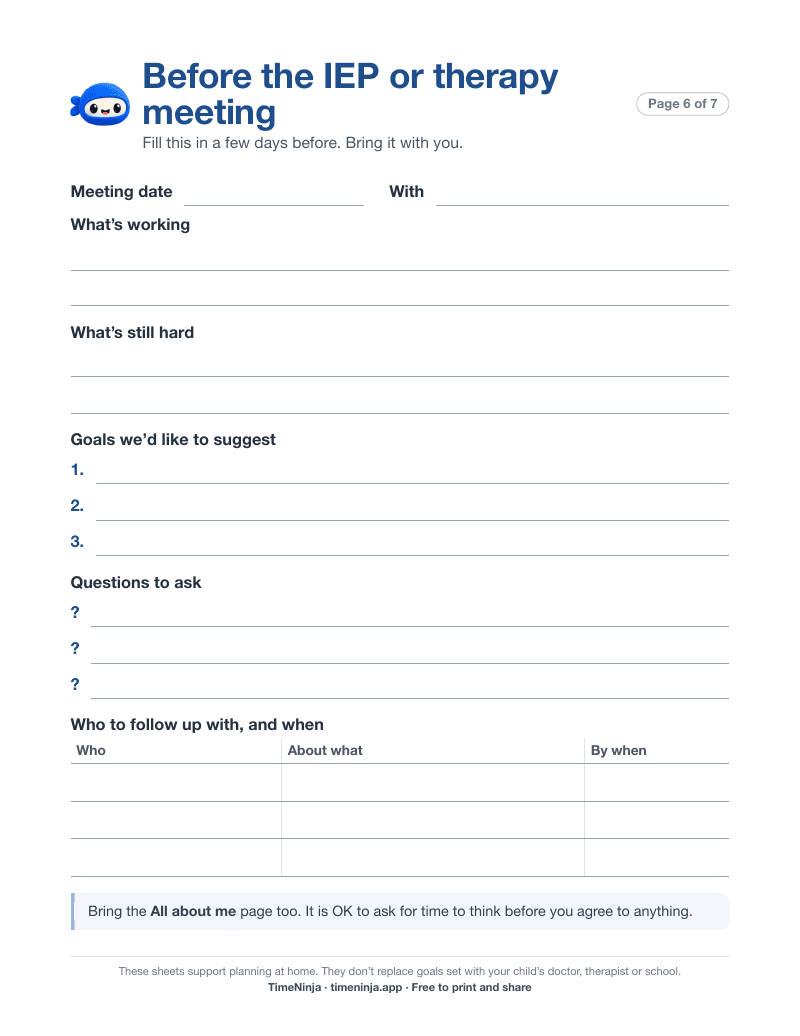
Page 6, Before the IEP or therapy meeting, helps you arrive with clear notes: what is working, what is still hard, goals you would like to suggest, questions to ask, and who will follow up and by when. Fill it in a few days before, when you are not rushed.
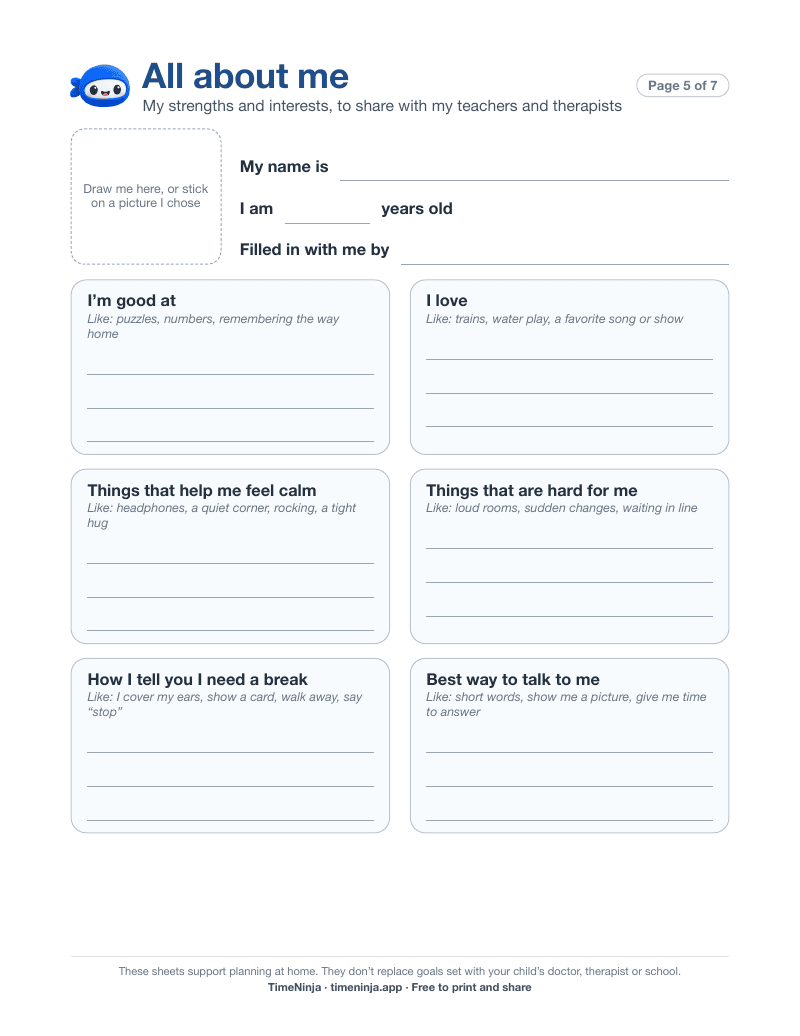
Bring page 5, All about me, too. It gives teachers and therapists a quick picture of your child’s strengths, interests, what helps them feel calm and how they ask for a break. Many families give a copy to each new teacher or aide.
It is OK to ask for time to think before you agree to anything. For how school support works in the US, UK and India, read our guide to IEP, 504 and school support.
More free printables and games
For your child, there are free printable activity sheets for ages 3 to 7, and calm ADHD and autism learning games with no timers, no ads and sound you can turn off. Our guide to learning games and printables for kids with ADHD and autism explains how each one fits.
Working with a therapist? Read what to expect from your child's therapy, how to tell if a therapist is good, and, if your child doesn't speak yet, what non-speaking kids may be feeling.
Once the goals are set, the free Progress Planner helps you track them week by week and review every 3 months.
New to autism? Start with our autism in kids guide, which links every topic on this site.
Communication goals go faster with pictures. Our free Everyday Words cards cover core words, food and daily routines in English and Hindi.
Common questions
Are these autism goal sheets really free?
Yes. Download the PDF and print as many copies as you need for home, school or therapy. There is no sign-up and no email.
What age are the sheets for?
They are made for parents of autistic children aged about 3 to 10. The planning pages work at any age. The goal ideas lean toward younger children, so change the words to fit your child.
How many goals should we work on at once?
One to three. One small goal your child cares about often goes further than five big ones. Look at it once a week, and make the next step smaller if the week was hard.
Can I share the All about me page with my child's school?
Yes. Page 5 is made to share with teachers, aides and therapists. It tells them what your child is good at, what helps them feel calm and how they ask for a break.
Do these sheets replace IEP or therapy goals?
No. These sheets support planning at home. They don't replace goals set with your child's doctor, therapist or school. They help you bring clear ideas and questions to those meetings.
These sheets support planning at home. They don't replace goals set with your child's doctor, therapist or school.